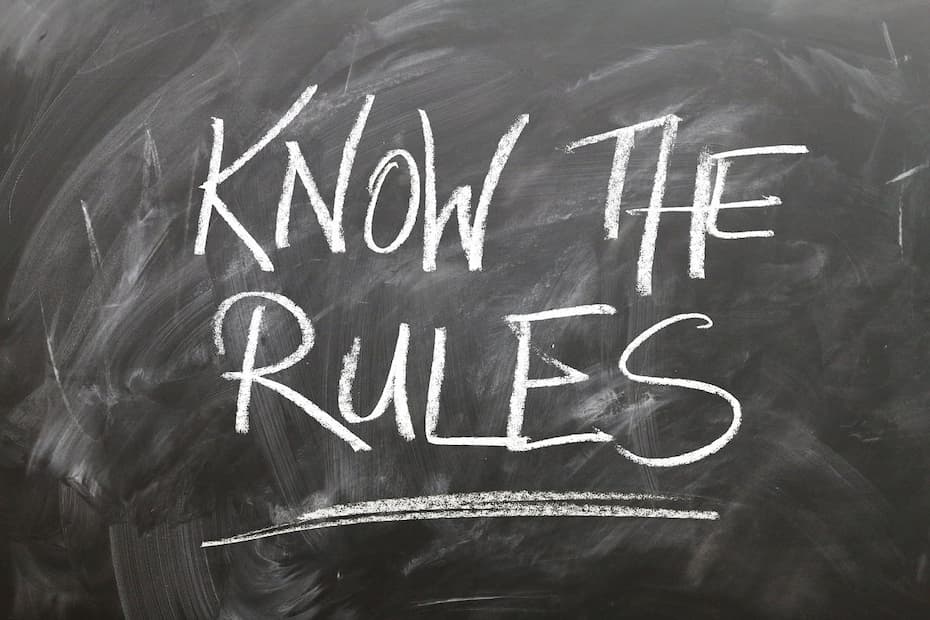
If someone had told first or second-semester of grad school me that I’d be writing a post for this blog about how it’s okay not to always use the rules … well, I’m not exactly sure what my reaction would have been, but I can firmly say it would not have been anything along the lines of “makes sense.”
Over a decade of real-world experience with both writing and editing, though, have taught me many valuable lessons, one of which is the power of just not using the rules.
Let me back up a second here. I’m not suggesting to toss out all the rules. “Sentences? Who needs ‘em?
Bye!” True, that is a literary option, and if you want to pursue it, more power to you. But I highly suggest you study up on how authors make themselves understandable without sentence structure first, since it’s so opposite to how our brains comprehend messages and language.
Anyway, moving away from the presence or lack of sentences, the advice I see industry professionals give often is “learn the rules so you can break them.” I’ve given this advice many times myself. It’s solid, and under most circumstances, I agree with it.
And now, as I do, I’ll sort of contradict myself. I agree with learning the rules so you can break them, unless the actual process of learning the rules is what keeps you from ever writing (or doing anything else).
Example. A few weeks ago (in this post), I mentioned I was teaching myself about audio editing. I’ve always enjoyed music, but make no mistake, my place was always at the microphone or on the stage/risers. I had no idea how the wires worked or what they did, and I was fine with that because there were brilliant tech people who did. (Side Note: Tech and crew are always underappreciated in performance spaces, so a heart-felt thank-you to everyone who made show night possible behind the curtain.)
Fast-forward to now. Am I going to apply for a job in Disney’s audio department? Not even a little bit. But I understand far more than I did last month. And aside from a few internet searches, I haven’t read a single line from anything resembling a user manual. I decided I wanted to try something. I decided I enjoyed the thing, and I started figuring out how to do the thing better.
But when I was at the “trying” part of the process, I didn’t let my lack of knowledge stop me from doing it. I just recorded, listened, realized I could do things better/differently, and kept trying stuff.
In a nutshell, I didn’t learn the rules before I tried.
Now, if I was going to actually pursue this professionally, I’d take classes, learn from people who know what they’re doing, and so forth. Right now, though, it’s a hobby, and I’m perfectly content to keep plucking away with the learning method of [insert internet search term here] and then apply what I found. The rules still matter, but they only matter as I need them. They aren’t a giant block of text standing between me and this thing I want to do.
Now to sort of contradict myself again, this isn’t necessarily the approach to take all the time. I could have built up the understanding about storytelling I have now through years of trial and error (and many authors do just this). But since I knew this was something I wanted to pursue professionally, I chose to get the MFA and learn the rules up-front so I could break them later.
Bottom Line: Rules are great, but they shouldn’t be the thing that stops you from exploration. Not every endeavor has to become a career or even a publicly shared project. If you want to try something and see if you enjoy it, don’t worry about the rules. Just do it. The rules will be there if and when you want to learn them.
👋 Fair travels,
Mary
P.S. A big thanks to geralt from pixabay.com for the image.